
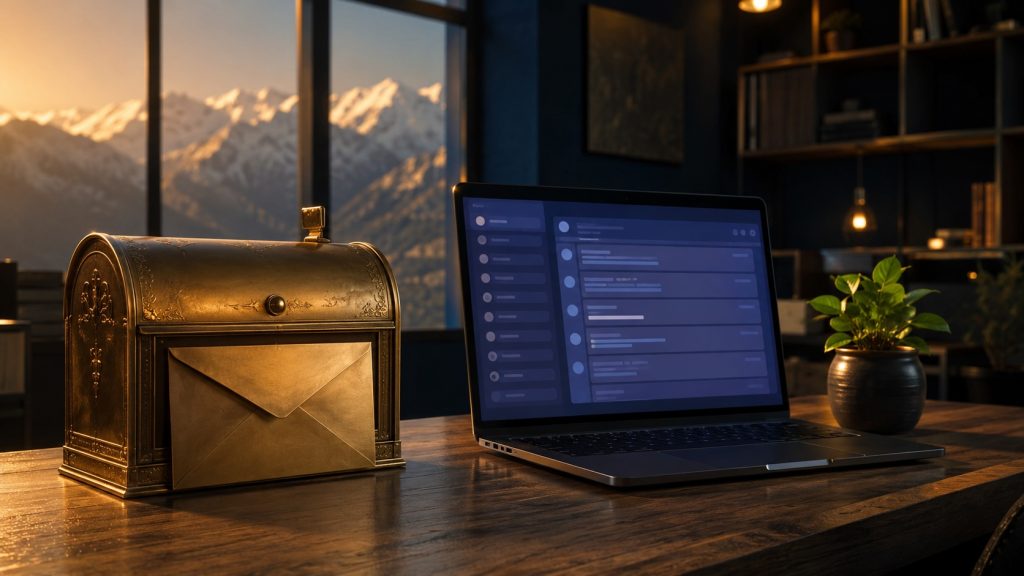
Many companies in Dushanbe gave up on email newsletters long ago: why bother if customers are on Telegram and Instagram? But email has a quality that social media lacks. Your subscriber list belongs to you. No algorithm cuts your reach, nobody charges you for every impression, and the email reaches a person who agreed to receive it. That is why a newsletter should be seen not as a one-off promotion but as an ongoing sales and retention channel.
What makes the channel different in the local market
An email app is installed on almost every smartphone. People check it less often than messengers, but they read emails more attentively, without an endless feed alongside. Another advantage is that audiences in Tajikistan are not yet swamped with newsletters the way people in large markets are. An email from a brand someone knows is more likely to be opened than binned unread. With a sensible approach, this delivers a good response at modest cost.
Which businesses benefit most from email
The channel brings the greatest return where customers come back: online shops, service companies, training centres, restaurants and cafés with a loyalty programme. If a customer comes at least once a quarter, the newsletter has something to offer them. Emails are useful for one-off services too, but their task is different — collecting reviews and referrals rather than repeat orders.
Before launching, settle on a goal. Retaining current customers, offering additional products, preparing those who are still hesitating to buy — each task needs its own emails. If you try to do everything in one message, it will turn out overloaded and muddled.
How to build a list honestly
Sending emails without the recipient’s consent is spam, and people treat it accordingly. Subscription must be voluntary, and the person should understand straight away why they are leaving their address: a discount on the first order, a useful guide, being the first to hear about promotions.
Where to collect contacts:
- a form on your website with a specific promise instead of a faceless “subscribe to our news”;
- the till, the receipt, a booking or appointment form;
- existing customers who have interacted with the company themselves — but not bought or third-party lists.
Confirming the subscription via a link in the first email weeds out typos and random addresses, which means a cleaner list.
Deliverability and frequency: how to keep subscribers’ trust
Even a good email is useless if it ends up in spam. Reaching the inbox depends heavily on your domain’s technical settings: SPF, DKIM and DMARC records. They are worth checking before the first send, not after the complaints.
The other side of the issue is rhythm. Daily emails without a reason quickly become an irritant, and people unsubscribe. The guideline is simple: one meaningful email a week will do more good than a series of pushy offers. Split your list into at least three groups — newcomers, regular customers and those who have not bought for a long time — and write to each about what matters to them.
What to write about when there are no promotions
There are more reasons to send an email than it seems. Answers to the questions customers ask most often. Customer stories. A look behind the scenes: how the product is made, who is behind the service. A selection of useful materials is almost never perceived as pressure, so you can send it regularly and stay in touch until the next purchase.
How to measure effectiveness
Opens and clicks only show the first reaction. It is far more important to understand what happens next: did the person submit an enquiry, place an order, come back again? To find out, build the newsletter into your overall customer journey and track at which step emails actually move people towards a purchase.
And do not compare your figures with an abstract norm. Open rates and conversion vary noticeably between industries, so it is better to benchmark against data for your own sector — for example, Mailchimp’s industry benchmarks.
Key takeaways
Email in Tajikistan is not an outdated channel but an underrated one. Subscribers are not yet tired of emails, and a contact in your own list costs less than another ad impression. Collect addresses with consent, set up your domain without errors and send emails at a clear, regular rhythm so that subscribers look forward to them rather than delete them.
If you want to build newsletters into your brand’s overall digital communication, the SKY Central Asia team can help with a launch plan — find out more about our digital marketing services.

Leave a comment