
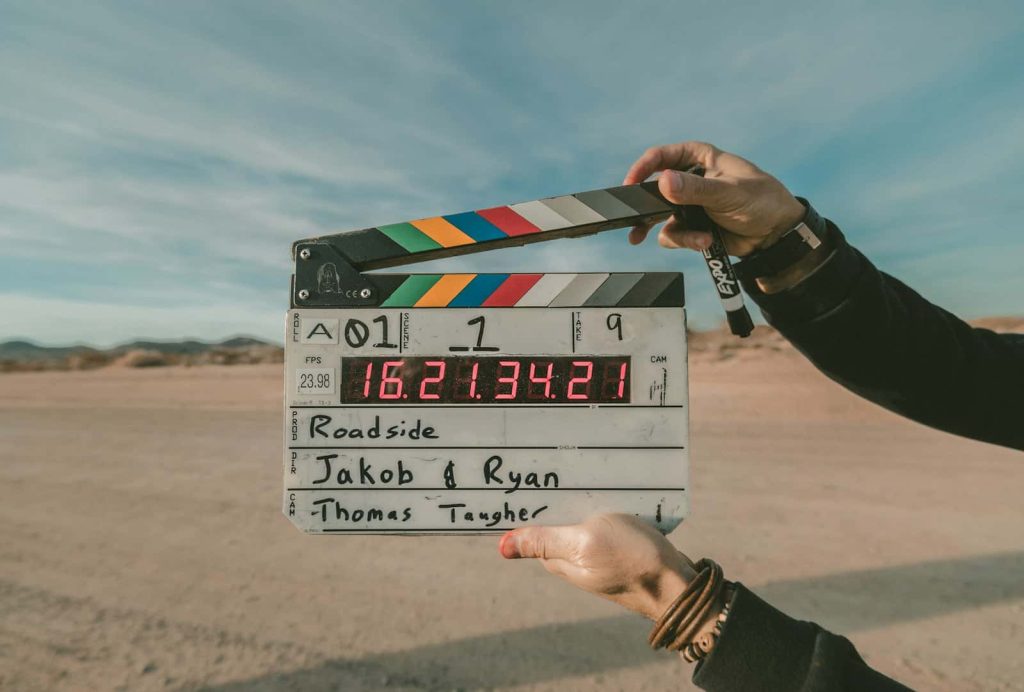
A video turns out the way the brief described it. If the goal is vague and the platforms and deadlines aren’t stated, the production team will be guessing, and reworks will eat up both time and money. Below is a template you can copy, questions to prepare with and an example filled in for a hypothetical service.
Five questions before you open the template
- What task does the video solve? Introducing the brand, announcing a promotion, generating leads, attracting staff or training customers.
- Where will it be seen? TV, YouTube, Instagram Reels, the website, screens at points of sale.
- What should viewers do after watching? Call, place an order, visit the shop, subscribe.
- How much time and money do you have? Can you meet the date you need, allowing for filming and editing?
- What do you like and what don’t you? Pick two or three examples of each.
Honest answers to these questions already cover half the brief.
Brief template: 13 sections
The essence of the task
- 1. About the company and product: what you sell; the main difference from competitors in one or two sentences.
- 2. Video goal: awareness / leads / sales / promotion launch / recruitment / training.
- 3. Audience: age, city, language; what worries and motivates them; what they want to hear.
- 4. Key message: one sentence the viewer should remember.
Form and content
- 5. Platforms and duration: TV / YouTube / Instagram / other; 6, 10–15, 30 or 60 seconds; vertical, horizontal or square frame.
- 6. Draft storyline: a hook in the first seconds → benefit → demonstration or proof → call to action and end card with contacts.
- 7. Tone and style: friendly, expert, emotional or humorous; links to references.
- 8. On-screen text and subtitles: whether Russian and Tajik versions are needed; three to five short phrases for captions.
- 9. Restrictions: legal disclaimers and promotion terms; brand book with colours, fonts and logo.
Organisation
- 10. Filming: number and type of locations; whether actors or a presenter are needed; which props and product must be in shot.
- 11. Deadlines: script, shooting day, rough cut, final version.
- 12. Money and metrics: budget range; which indicators you’ll use to assess the result (view-throughs, clicks, leads, reach).
- 13. Communication and approvals: who is responsible on your side; where you discuss revisions and how long they take.
Example: a brief for a water delivery service
A hypothetical company; all data is invented for illustration.
| Section | What was written |
|---|---|
| Product | Drinking water delivery across Dushanbe; fast, with payment to the courier |
| Goal | Orders via messenger and phone calls |
| Audience | Young families and small offices; Russian and Tajik; value speed and no prepayment |
| Key message | “A couple of taps and your water is on its way; pay on delivery” |
| Format | Skippable ads on YouTube and Reels; two frame orientations |
| Storyline | Empty cooler, last drops, caption “Run out of water?” → order in the app in a couple of taps → courier at the door, happy homeowner → “Order now” with promo code, website and phone number |
| Tone | Warm, dynamic, everyday “true to life” scenes |
| Captions | Two language versions: “Order in a couple of clicks”, “Fast delivery”, “Pay on delivery” |
| Restrictions | A footnote that delivery time depends on the district; brand colours and logo |
| Filming | One location (flat and stairwell), courier and heroine, water bottles and cooler |
| Deadlines | Script, filming, rough cut and final a few days apart |
| Budget and metrics | One shooting shift; view-through rate, click-through rate and cost per lead compared with targets |
| Approvals | The company’s marketer, a shared chat, revisions within a day |
Where briefs usually go wrong
- Several goals at once. A video that simultaneously sells, builds image and recruits staff does none of it well. Choose the main one.
- Overloaded captions. Short phrases, large type and contrast are readable; paragraphs on screen are not.
- No subtitles. Many people watch social media videos with the sound off, and without text the message doesn’t reach them.
- One version for every platform. Plan for cut-downs of different lengths and different aspect ratios.
- No deadlines and no one in charge. Approvals drag on and the deadline is missed.
What makes up the budget
- Pre-production: script, storyboard, casting, location scouting.
- Production: film crew, equipment, location hire, props. This is usually the largest item.
- Post-production: editing, colour grading, sound, captions, versions of different lengths, subtitles in two languages.
The more detailed the brief, the more accurate the estimate: the producer can see how many shifts, locations and versions will be needed and doesn’t build in an extra buffer “for the unknown”.
You can get the brief template by leaving a short request. If you need a turnkey video, take a look at the video production page, the portfolio or the SKY Central Asia “Production and BTL” section.

Leave a comment