
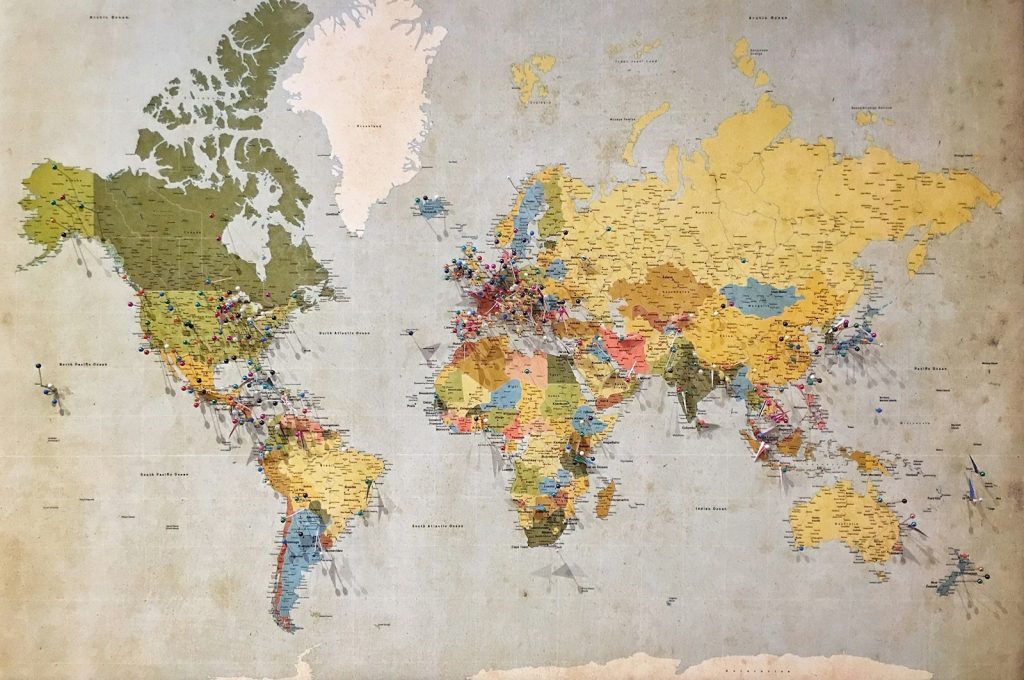
A campaign that worked brilliantly in Europe or Russia can go unnoticed in Dushanbe or Tashkent if it has simply been translated. Localising advertising for Central Asia is transcreation: carrying meaning, imagery and the media mix over into another language, culture and set of media habits. Let’s look at what to adapt, which channels to use and how to check the results.
The language layer: more than one language and more than one alphabet
In the countries of the region, Russian often serves as a common language between different groups, but alongside it there are Tajik, Uzbek, Kyrgyz and Kazakh — and for many people it is their native language that sounds warmer and more persuasive.
- Different writing systems. Tajik is written in Cyrillic, Uzbek mostly in Latin script, and Kazakhstan is moving to Latin script while Cyrillic remains widely used. Prepare separate layouts for each alphabet: line lengths and the look of the text change noticeably.
- Slogans need rebuilding. A word-for-word translation kills rhythm and wordplay. First write down what feeling and what action the slogan should trigger, and only then look for the wording in the local language.
The cultural layer: imagery, occasions, purchase motives
Values and heroes
Family, hospitality and respect for elders are themes that resonate strongly here. Recognisable people and real-life situations work better than a stock image.
Symbols and visuals
Check that the frame contains no colours, gestures or details that could be read as a religious or political hint. Unless they are part of the brand’s positioning, such elements are best removed.
The calendar
Navruz, Ramadan and Eid al-Fitr, Eid al-Adha and 1 September shift the agenda and demand. It is worth preparing dedicated occasions and offers for these dates.
What convinces buyers
Reliability, guarantees and transparent terms are valued. Physical shops and cash payment are still important, so show store addresses, payment methods and click-and-collect. Reviews from local buyers inspire more trust than global success stories.
Channels: where to speak and in what format
| Channel | Role | How to adapt |
|---|---|---|
| TV, YouTube, OTT | Reach and trust | For digital — 6-, 15- and 30-second cut-downs, subtitles, a strong first frame |
| Reels and other vertical formats | Engagement | A series of short native videos instead of one big one |
| Instagram and Telegram | Announcements, promotions, service | Telegram — for subscription chains, retail chains and support |
| VKontakte, city community pages | Targeted reach | Only where your audience actually uses them |
| Outdoor advertising | Link to location | Store addresses, a QR code for the promotion, local occasions |
| Radio | Frequency | One key offer and a memorable phrase that is repeated in digital |
| Search and shopping ads | Capturing demand | Local catalogues and affiliate networks; branded and generic queries reported separately |
Quality control: before, during and after launch
Before production
- A brief that spells out the desired emotion and target action.
- A glossary: approved terms in the local language and wording to avoid.
- Two or three examples of “how we want it” and “how we don’t want it”.
During adaptation
- Transcreation instead of literal translation.
- Readability on a phone: contrast, font size, short phrases.
- Legal proofreading: promotion terms, deadlines, footnotes required by local rules.
- A small series of interviews or group viewings: is the message clear, does it offend, does it make people want to act?
- A quick A/B test of several hooks and visuals in digital on a minimal budget.
After launch
- A single UTM tagging scheme, promo codes by city, CRM integration and tracking of offline sales.
- Weekly summaries: reach and frequency, view-through rate and clicks, leads, sales, margin.
- Comparing test and control districts to assess the real uplift.
- Refining weak segments and placements every one to two weeks.
A six-week launch plan
- Week 1. Brief, glossary, cultural audit, key dates.
- Week 2. Transcreation of the slogan and copy, storyboard, local references.
- Week 3. Shooting a package of videos and banners, versions for different alphabets.
- Week 4. Testing hooks in digital, feedback, first round of refinements.
- Week 5. Launch in the main channels, tags, promo codes, dashboard.
- Week 6. Report, new hypotheses, shifting budget to the placements that worked.
Quick answers to frequent questions
Can you get by with one language for the whole region? Better not: a combination of the local language and Russian usually delivers deeper engagement, and that is easy to check with a test.
How can you quickly tell whether the adaptation has worked? Look at completed views, saves and shares, questions in direct messages and chat, and growth in branded searches in the local language.
Will a global creative work without changes? Sometimes, but a local version with new captions and a local hero is usually stronger.
Preparing to enter the region? Write to us — SKY Central Asia will prepare a localisation concept and a media plan for your cities as part of our strategy services.
Leave a comment