
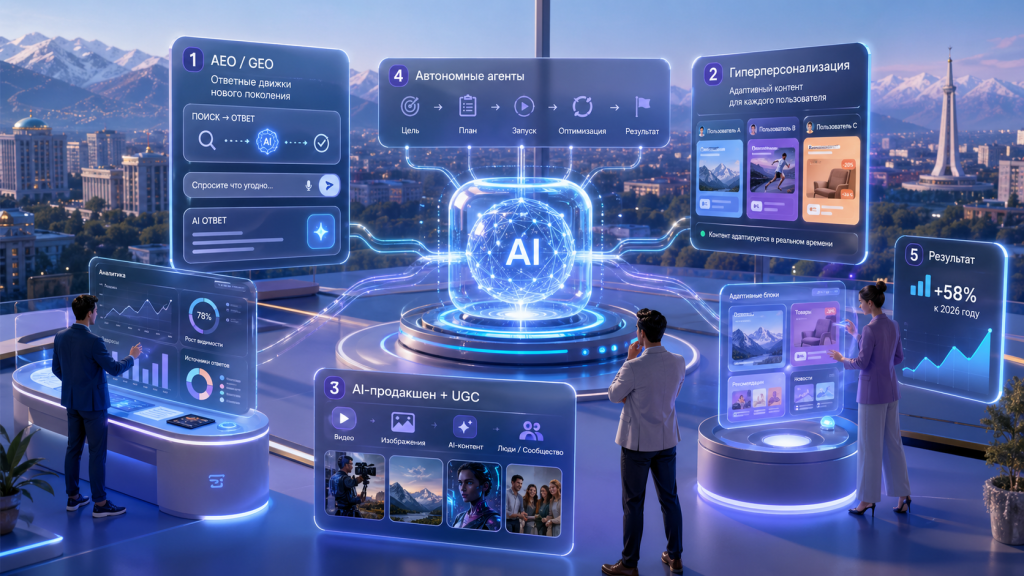
If 2024 was the year of excitement over ChatGPT, 2026 has become the year of agentic systems. The market has moved from simple chatbots to autonomous digital assistants that can set tasks for themselves and see them through to completion.
1. From SEO to AEO (Answer Engine Optimization)
Traditional search is changing for good. Users click through lists of links less and less, preferring to get a ready-made generated answer right in Google’s results or from AI assistants.
- Trend: Brands are no longer competing for the “top spot” but to become part of the AI’s answer.
- What to do: Adapt your content to conversational queries and GEO (Generative Engine Optimization).
2. Real-time hyper-personalisation
In 2026, marketing is learning to understand customers’ needs before they are aware of them themselves. AI analyses user behaviour on the fly, changing website content, banners and offers in the middle of a session.
- Trend: One-size-fits-all landing pages are becoming a thing of the past. The future belongs to adaptive content that adjusts to the context of every click.
3. AI production and “human” content
The paradox of 2026: the easier it has become to generate perfect images and copy, the more sincerity and UGC (content from real users) are valued.
- Trend: AI has taken over routine work — from creating product listings to editing video. But a human is still responsible for “meaning” and emotional connection.
- Fact: Companies are increasingly labelling AI-generated content to maintain their audience’s trust.
4. Autonomous marketing agents
The biggest shift of the past two years is the adoption of systems that don’t just give advice but run the process. They choose target segments, launch email campaigns and adjust the marketing plan based on real-time response, all on their own.
The bottom line: In 2026, the winners are not the companies that have simply “implemented AI” but those that have managed to combine the digital precision of algorithms with human empathy and strategic vision.
Leave a comment